
Tug Use in Port
E-learning for maritime professionals involved in ship handling with tugs, including (future) tug masters, pilots, and trainers. The contents of this course is based on the standard reference work ‘Tug Use in Port’ by Captain Henk Hensen. The content has been tailored for the use of this course, with input from many partners from the tug community.
Each module takes appr 30 minutes each, with knowledge questions and questions that test true understanding of the contents. The theory is enriched by many engaging images, videos and presentations that explain and visualise the theory. A dashboard allows you to plan and track your progress.
For information on our pricing, please contact us at digital@polestar-publishing.com.
Editorial Board
E-learning courses:
Factors influencing tug choice
Factors influencing tug choice
This module discusses the factors that influence the choice of tugs, such as type of port or the services required in that port.
You will learn:
Environmental conditions that impact the use of tugs
The categories of ports and their approaches
Different types of ships calling at ports
Services in and around a port
General tug design
General tug design
In this module, we will discuss the design of the tug and the specific tug elements such as fendering and towing equipement.
You will learn:
The wheelhouse construction and layout
The layout of the superstructure of a tug
Hull and underwater design
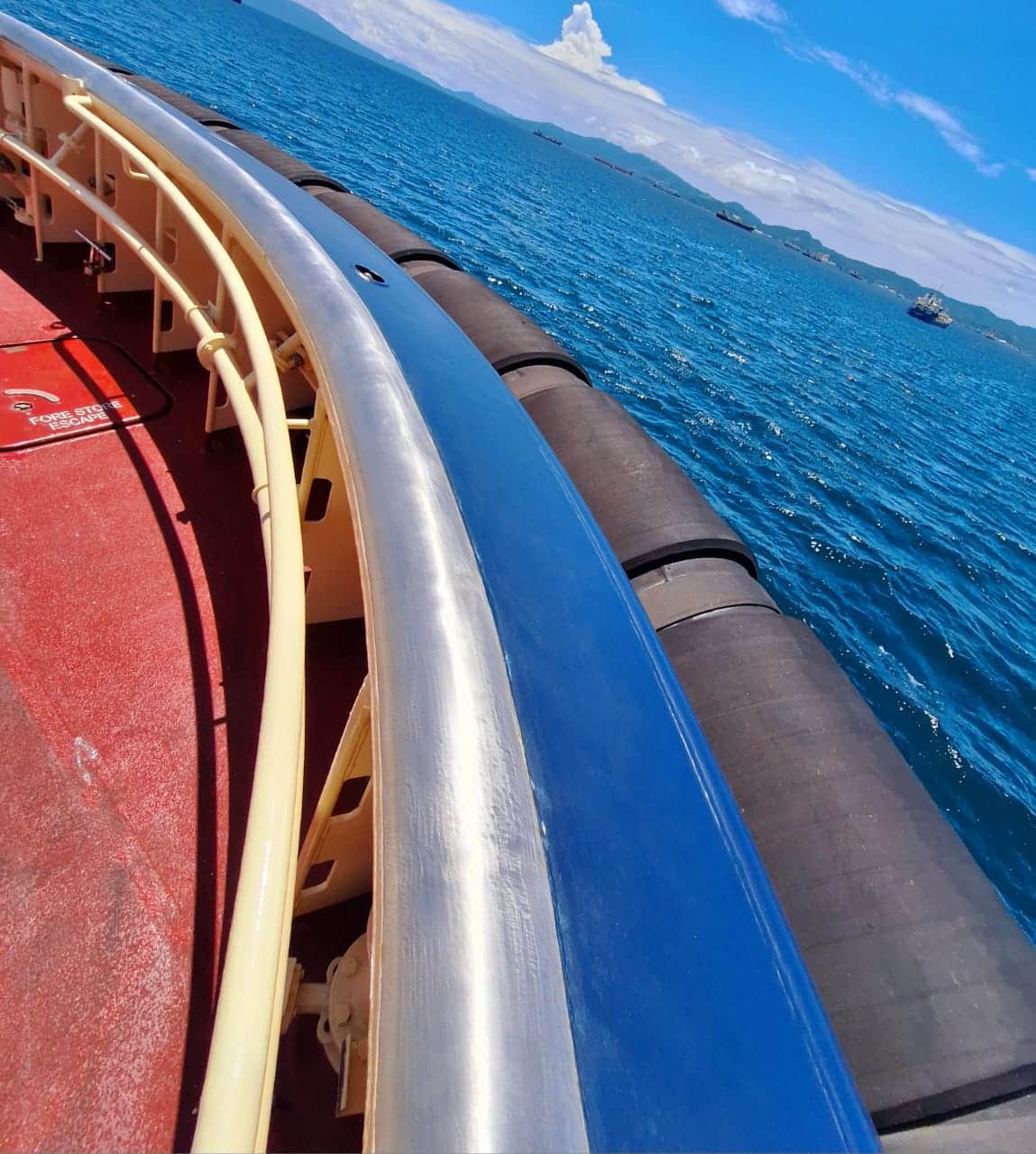
Fendering
Towing equipment
Towing lines
Towing lines
A towline connects the tug and ship, bearing dynamic loads from their movement. This module explores the key requirements for towlines and tugs.
You will learn:
Basic requirements
Towline types
Maintenance and inspection
Composition of towing lines
Towline handling
Safety factors
Towline length
Effective ship and tug handling
Effective ship and tug handling
In this module we address the subject of effective ship handling with tugs, the underlying principles and aspects that have an impact on ship handling.
You will learn:
Basic principles
Speed and steering control
Basic tug handling
Environmental limitations
Other practical aspects that impact tug and ship behaviour
Tugs with aft propulsion
Tugs with aft propulsion
In this module we discuss the most common harbour tug types that have aft propulsion: conventional tugs, ASD tugs and combi-tugs. For each type, we discuss its specification, the performance and the manoeuvring.
You will learn:
The key features of conventional tugs, and their impact on performance and manoeuvring
The key features of ASD tugs, and their impact on performance and manoeuvring
The key features of combi-tugs, and their impact on performance and manoeuvring
Tugs with forward propulsion
Tugs with forward propulsion
In this module we discuss the most common harbour tug types that have forward propulsion: Voith Schneider tugs, ATD tugs and other tug types such as Rotortugs, carrousel tugs and Transverse tugs. For each type, we discuss its specification, the performance and the manoeuvring.
You will learn:
Voith Schneider tugs
ATD Tugs
Other tug types
Ship assistance
Ship assistance
The assisting method depends on multiple elements, such as the the type of tug available, type of berth, assisted ship etc. In this module we will discuss the various assisting methods provided by tugs and explain what the main differences are, and why.
You will learn:
Objectives of ship assistance
Tugs towing on a line
Particular methods of towing on a line
Other methods of ship assistance
Considerations for the determination of ships assistance
Bollard pull
Bollard pull
In this lesson, you will discover what bollard pull is, why it is a fundamental concept in tug operations, and how it plays a vital role in ensuring safe and effective ship handling. You will learn to define bollard pull and its significance, identify the standard units used to measure bollard pull and recognise the importance of bollard pull in maintaining safety during ship handling.
You will learn:
Introduction to bollard pull
Measuring bollard pull
Calculating required bollard pull
Risks and safety
The following modules will be available soon:
- Interaction
- Tug Stability
- Escort Tugs
- Communication
